Portfolio — Daniele Vitale

Daniele Vitale

Data-Driven Student / Business Engineering Student

"Raw data is just noise. The role of the Data Analyst is to listen to that noise and turn it into clear decisions, strategy and innovation."

Data Analysis Idea
5 Projects
Data in practice
Scroll
Data analysis in practice

The projects

Concrete experiences, each with a goal, a method and a measurable result. Click a card for the details.

01 · 2023–2024ASOC
Civic Monitoring

ASOC

Data Analyst & Designer

A Scuola di Open Coesione — civic monitoring of a European-funded project: from reading spending data to telling the story of the results.
See details →
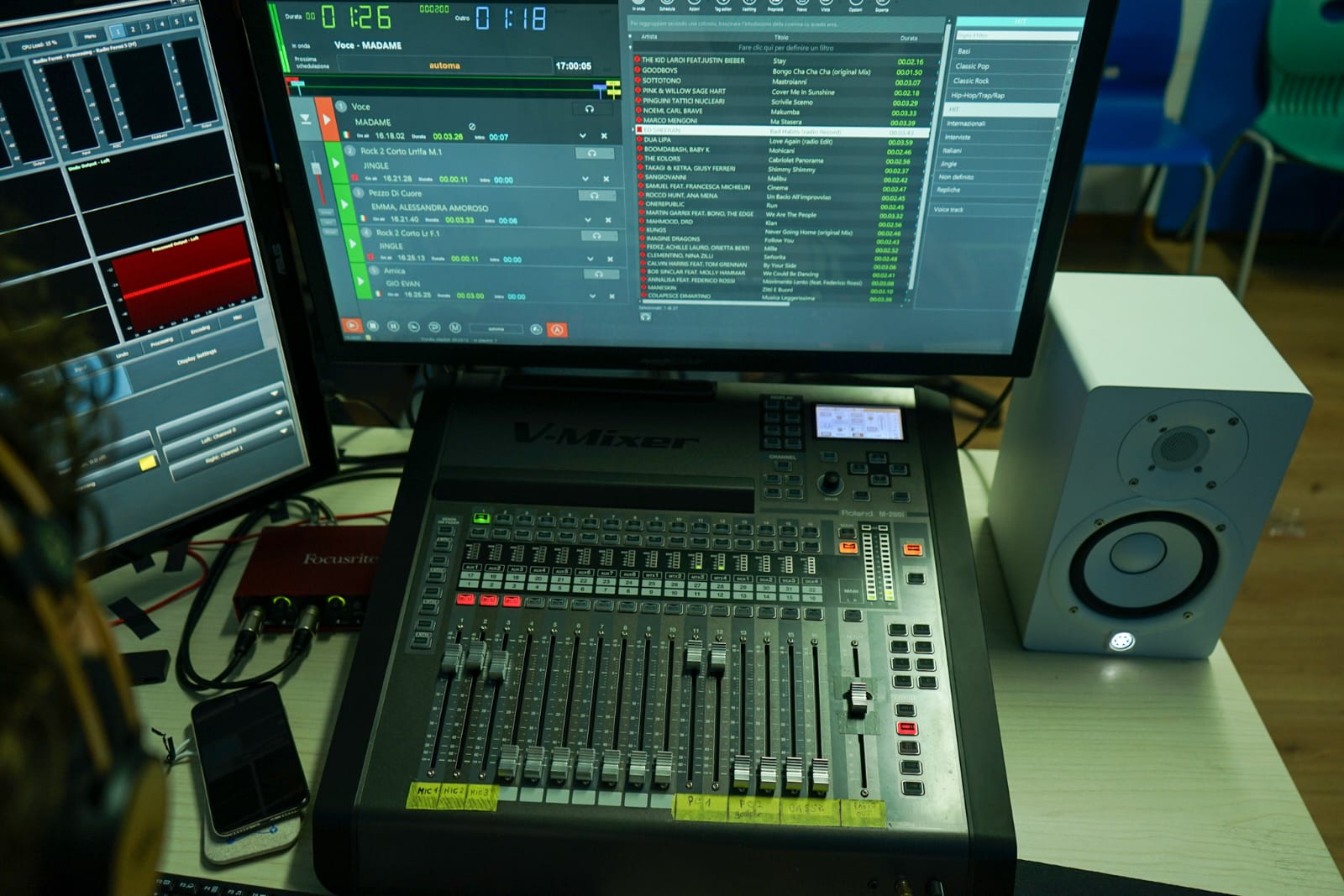
02 · 2023–2025Li.Fe Radio
Audience Analysis

Li.Fe Radio

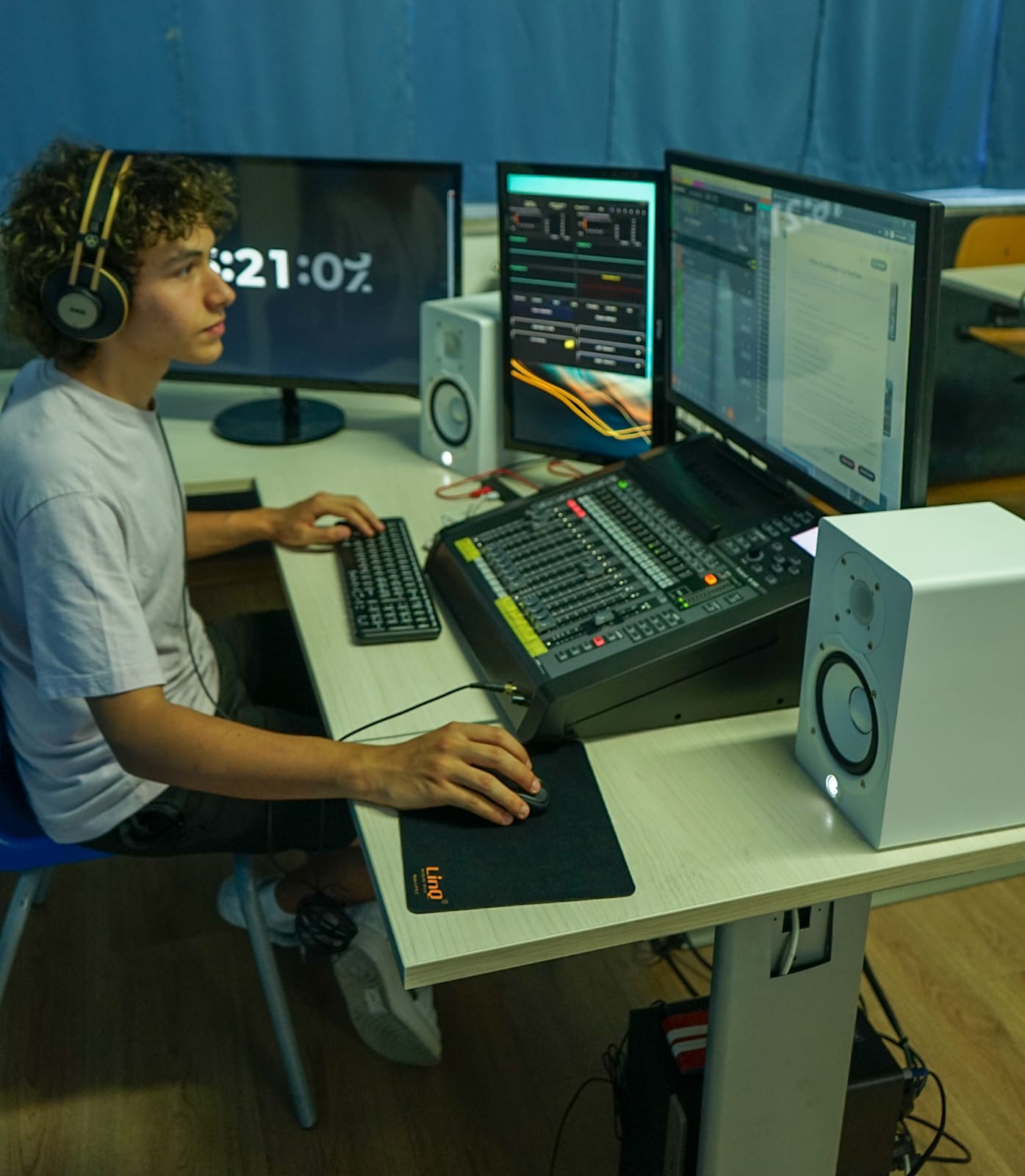
Music Supervisor & Analyst

Redesign of the radio schedule based on the analysis of listeners' tastes (sample: 852 votes).

See details →
03 · 2024–2025Oura Ring
Market Analysis

STEM Economy

Market Analyst

Oura Ring: understanding the difference between a mere "invention" and true commercial "innovation".

See details →
04 · 2024–2025NAO TecRef
Artificial Intelligence

Robotics with NAO

Data Collector & Analyst

Collecting and organising the dataset of refereeing cases for the NAO robot's AI assistant.
See details →
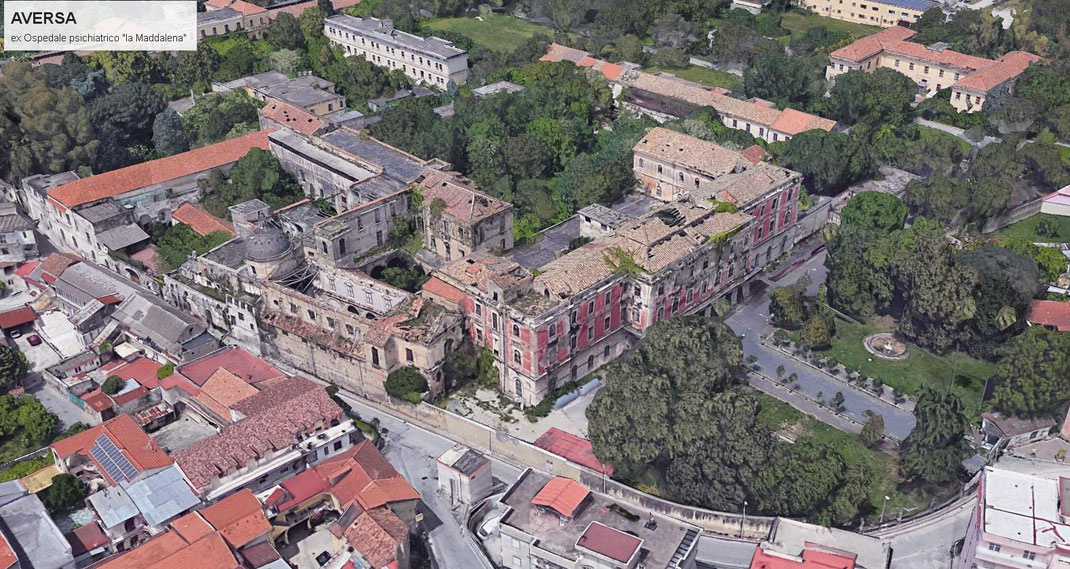
Aerial view of the Maddalena Complex — former S. Maria Maddalena Psychiatric Hospital, Aversa
Civic Education · 2023–2025

The Maddalena Complex

"Safeguard the past, build the future" — an active-citizenship project to bring a forgotten heritage site back to light.

What it is about

The Maddalena Complex in Aversa is the former S. Maria Maddalena Psychiatric Hospital: a public asset of huge historical value, today abandoned. Its decay is not only a cultural loss but a violation of constitutional principles — Article 9 (protection of heritage), Article 42 (social function of property) and Article 97 (proper functioning of public administration).

Presentation of the complex

How can you be an active citizen?

  • Learning and telling the story of local heritage
  • Taking part in awareness initiatives (e.g. FAI Days)
  • Using digital tools to make heritage accessible
  • Encouraging institutions and communities to reclaim these spaces
My contribution

From the poster to the 3D museum

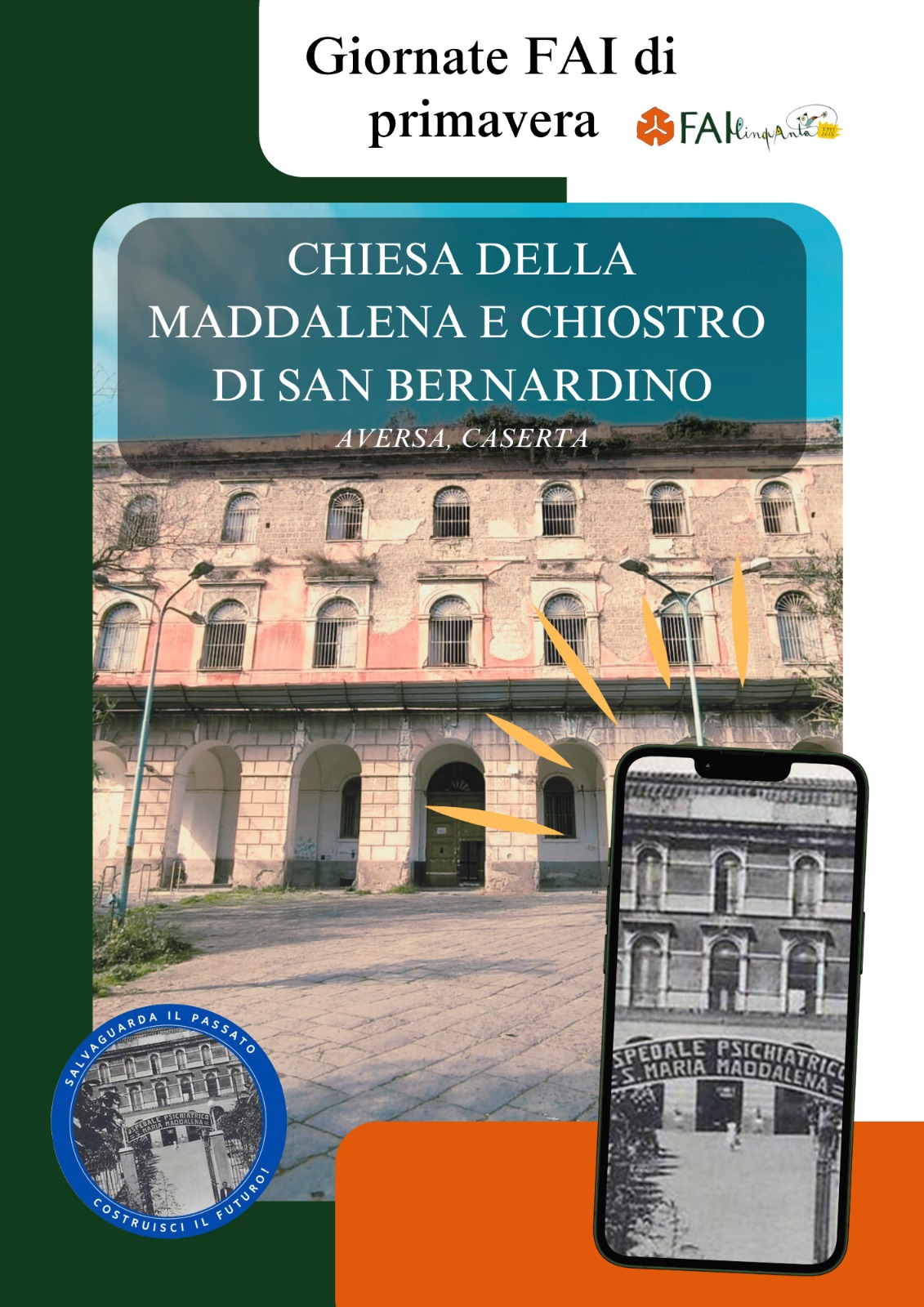
FAI Days poster — Church of the Maddalena and Cloister of San Bernardino FAI Spring Days poster with a historical photograph

Designing the presentation posters

For the FAI Spring Days (23 March 2025) I designed the official posters used by class 4Q to guide visitors through the complex.

  • Visual identity and layout of the event
  • Pairing of historical photographs with present-day images
  • Clear communication of place, date and visit route
The final idea

The 3D museum

To preserve the historical memory of the period psychiatric instruments, we created an interactive digital museum with rotatable 3D models. Drag with your mouse to explore.

Lobotomia prefrontale
~67k faces · drag to rotate
Sedia rotante
250k faces · drag to rotate
Tortura bianca
250k faces · drag to rotate
View all 8 models on Meshy AI
⚡ Elettroshock 🪑 Sedia rotante 🛏 Letto di contenimento 🥼 Camicia di forza 🧠 Lobotomia prefrontale ❄ Tortura bianca 🚿 Idrotortura 🔒 Cavigliere e polsiere
Behind the scenes

How we built the models

The technical journey, from the first attempt to the working museum.
Attempt 1

Blender — high quality, prohibitive complexity

  • Professional manual modelling: unlimited level of detail
  • Requires tens of hours per object and specialist skills in digital sculpting and rigging
  • Conclusion: not scalable for the number of objects to reconstruct
Blender
Open-source software for professional 3D modelling
❌ Discarded — too complex
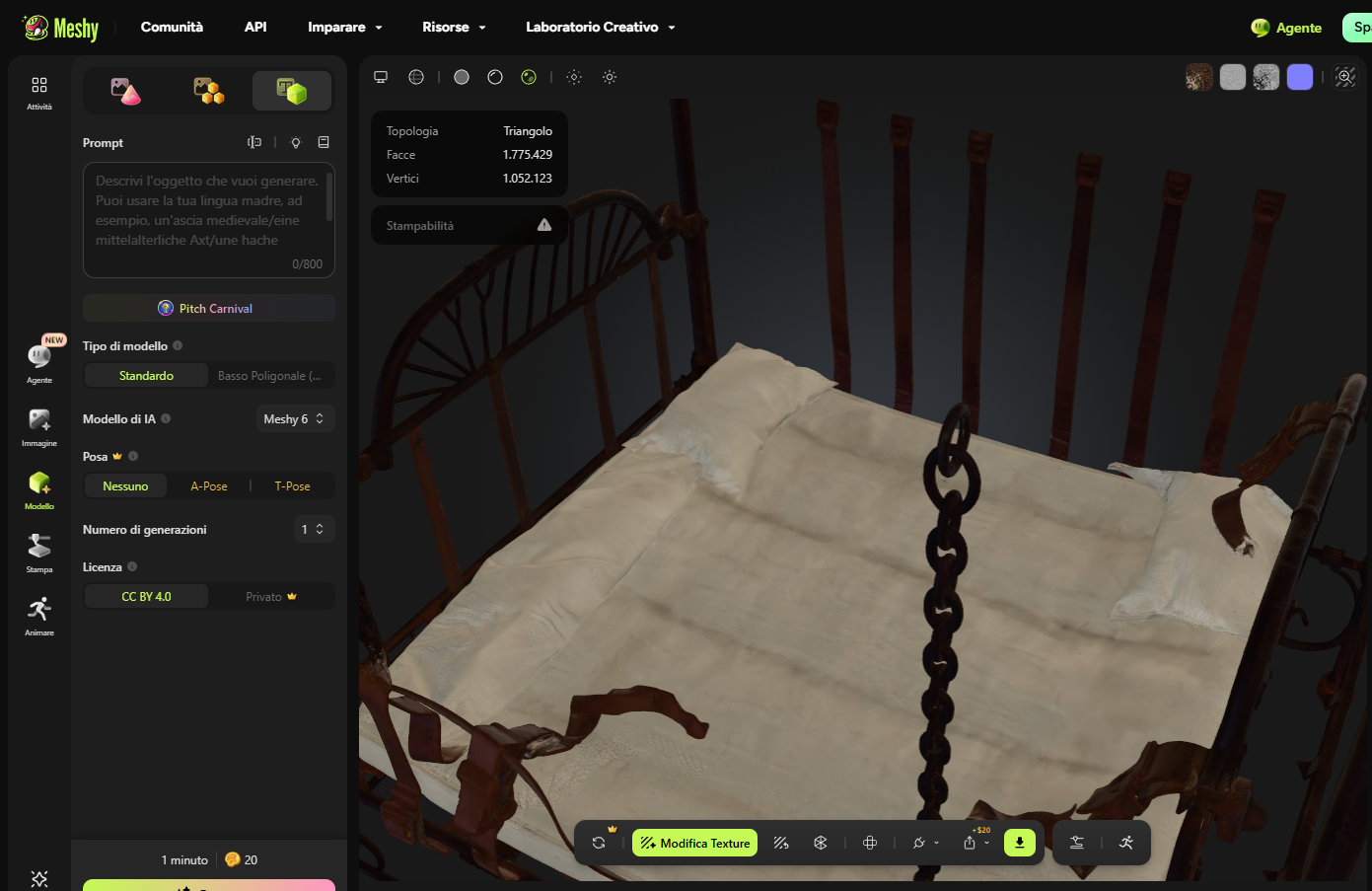
Meshy AI interface — the text box where the prompt is entered to generate the 3D model
Attempt 2 · the choice

Meshy AI — text-to-3D generation

  • Generates models with PBR textures in ~1 minute from a text description
  • Limit — cost in credits: each generation has a cost, producing several variants quickly becomes expensive
  • Limit — imprecision: the AI tends to "hallucinate" unrequested shapes and misunderstand the task without a very precise prompt
Key skill

How to write an effective prompt

For each model I structured the prompt precisely. Every choice has a reason:
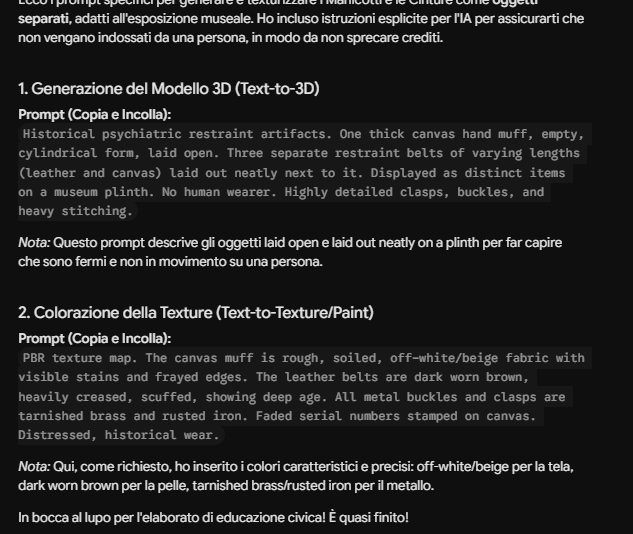
  • Explicit historical context — e.g. "historical psychiatric restraint": stops the AI from interpreting the object in a modern or sci-fi key
  • Explicit constraints on the object — e.g. "no human wearer", "on a museum plinth": avoids generating human figures that waste credits and distort the shape
  • Precise materials and colours — e.g. "tarnished brass", "off-white canvas": without guidance the AI picks arbitrary, historically inaccurate colours
  • Explicitly requested details — e.g. "highly detailed clasps, buckles, heavy stitching": forces the AI to focus on the meaningful elements
General rule for any LLM
An effective prompt is specific, contextual, constraining and incremental — better two targeted prompts than a single overloaded one.
Example of the structured prompt used to generate the 3D models on Meshy AI
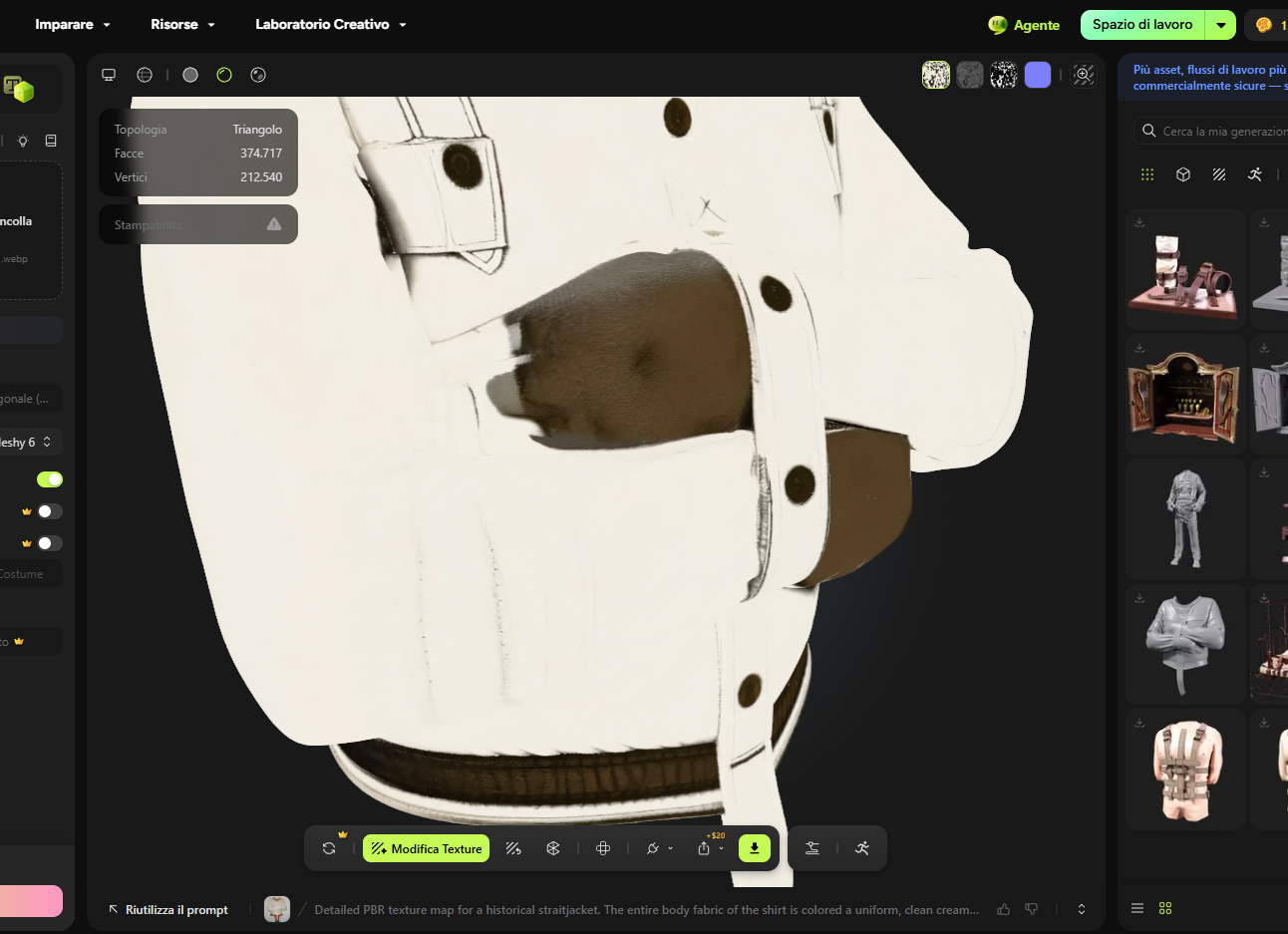
3D model generated on Meshy AI — the straitjacket with textures
Result

The model generated on Meshy AI

After the prompt engineering, Meshy generates the 3D model with PBR textures in about a minute. The result is exported in .obj format — a text file describing the geometry, accompanied by an .mtl file for the materials and the textures as image files.

  • OBJ: open, uncompressed format, geometry readable as text — very heavy for high-polygon objects
  • The difference with FBX, GLB: FBX is proprietary (Autodesk), GLB is compressed binary for the web — OBJ, by contrast, is the most universal and interoperable standard
  • Problem: a 1.7M-face model in OBJ is too heavy to load in any viewer
Optimisation

MeshLab — Quadric Edge Collapse Decimation

In the digital museum we used the OBJ files directly, reduced in face count with MeshLab's Quadric Edge Collapse Decimation (with texture) tool:
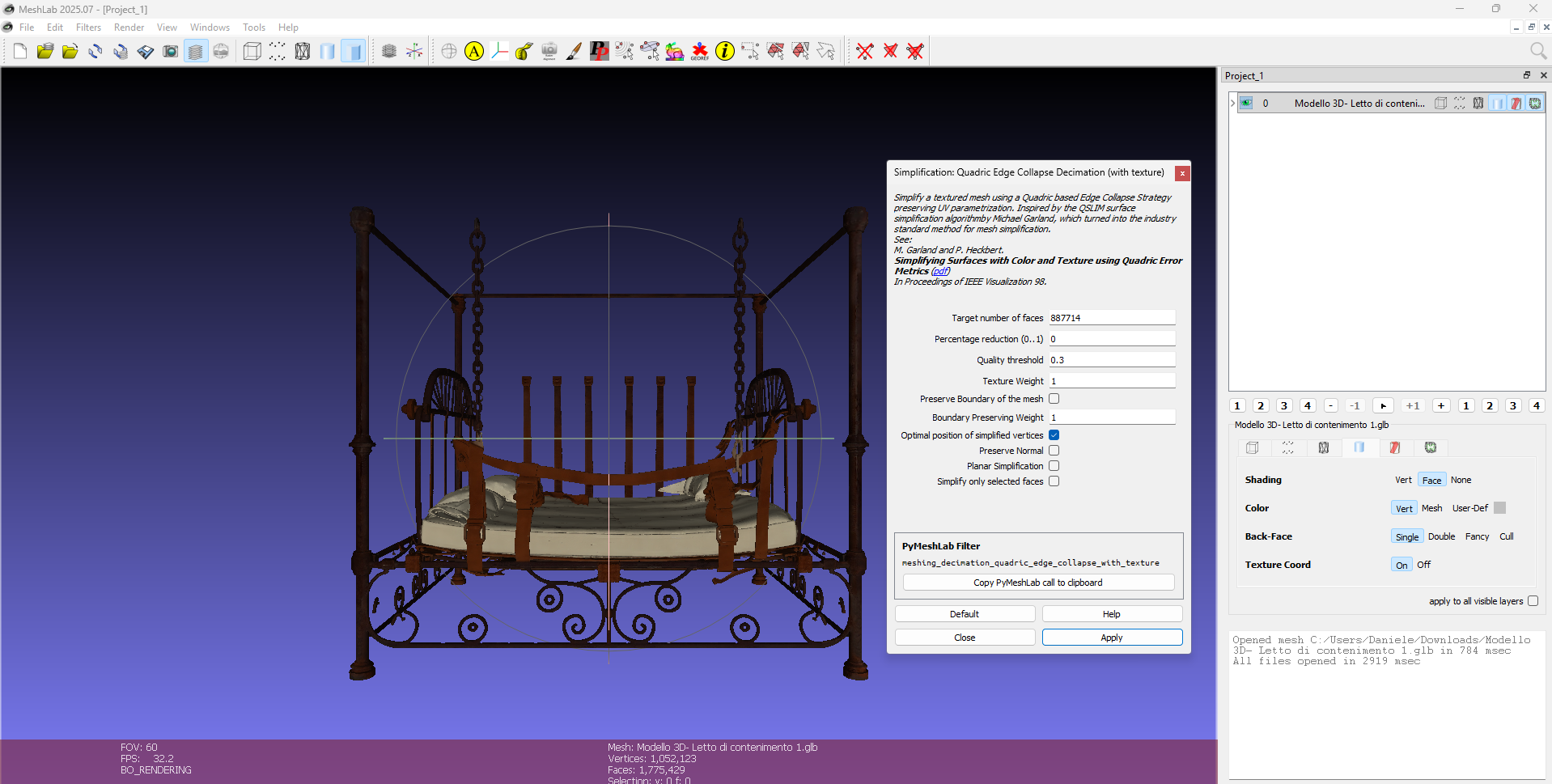
  • What it does: reduces the number of faces by collapsing the edges with the lowest quadric error on the surface — preserving the perceived shape and the UV coordinates of the textures
  • Face/weight ratio: halving the faces roughly halves the file size; reducing too far breaks up the meaningful details (buckles, stitching, chains)
  • Optimal target: the bed started at 1,760,000 faces, reduced to 250,000 faces — balancing visual fidelity and file size
  • Output: the reduced OBJ file goes into the digital museum, keeping the textures linked
MeshLab — Quadric Edge Collapse Decimation with texture applied to the restraint bed
Where this path leads

What comes next

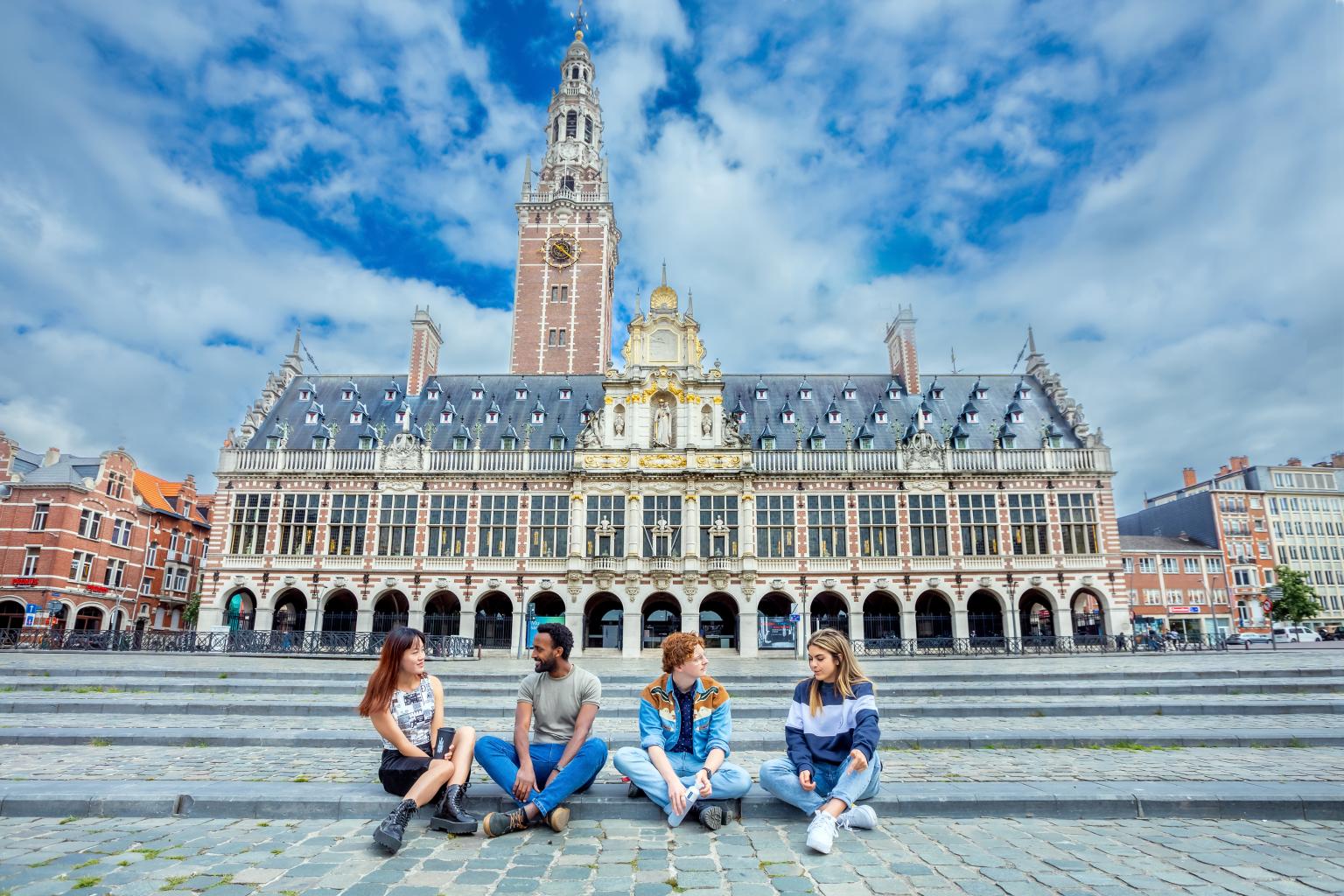
KU Leuven, Belgium

These projects gave me a direction — and I am already following it. I am now enrolled and studying Business Engineering at KU Leuven, in Brussels, bringing together analytical rigour and an economic mindset.

  • Analytical rigour applied to real data: collection, cleaning, visualisation and interpretation.

  • AI as a tool, knowing its real limits: cost, imprecision and dependence on data.

  • An economic perspective applied to concrete products and public funding.

  • Bringing heritage to life through innovative digital technologies.
Currently
Business Engineering — KU Leuven
Campus Brussel · enrolled and studying